When we think about energy in the context of health, we're generally referring to how we feel throughout the day or perhaps the number of calories we consume. But at a much more basic level, everything we associate with being alive depends on the continual movement and transformation of energy. Our ability to think, move, digest food, repair damaged tissues, and even maintain the physical structures that constitute our bodies depends on our ability to make energy available for those processes to occur.
If developing and maintaining health were simply a matter of eating well, exercising regularly, managing stress, and getting sufficient sleep, we might expect those who consistently do these things to be in reasonably good health. Yet there are people who struggle with their health despite doing much of what we're told is necessary to maintain it. What might account for a gradual deterioration in the body's ability to maintain itself under these circumstances?
If you've read any of my previous writing, you'll know that I place considerable importance on the environment in which we live and the extent to which it influences our ability to develop and maintain health. What I'd like to explore here are some of the physical processes upon which our biology depends, particularly those involved in making energy available to the body, and how they might be influenced by the conditions in which we live.
The energetic requirements of life
One way to think about a living organism is as a collection of highly organized and interconnected biological structures that require a continual supply of energy to maintain that organization. Without that energy, the structures and processes that allow us to function would gradually deteriorate.
Living organisms are considered open systems because they continually exchange energy and matter with their environment. We obtain the resources necessary to sustain ourselves from our surroundings and, in the process of utilizing those resources, release heat and waste back into our surroundings. Our ability to maintain our internal organization is therefore dependent upon an ongoing relationship with the environment in which we exist.
Consider how much of what the body is doing at any given moment is concerned with maintaining itself. Cells are continually replacing damaged proteins, repairing DNA, maintaining electrical and chemical differences across their membranes, and regulating the conditions necessary for the various processes occurring within them. Even when we're doing relatively little from a physical standpoint, there's a considerable amount of activity occurring within us that requires energy.
Our ability to exercise, recover from injury, fight off an infection, or adapt to and overcome challenges in our surroundings introduces additional energetic demands. How well we're able to respond to those demands will depend, in part, on our capacity to produce and utilize energy.
Where does that energy come from?
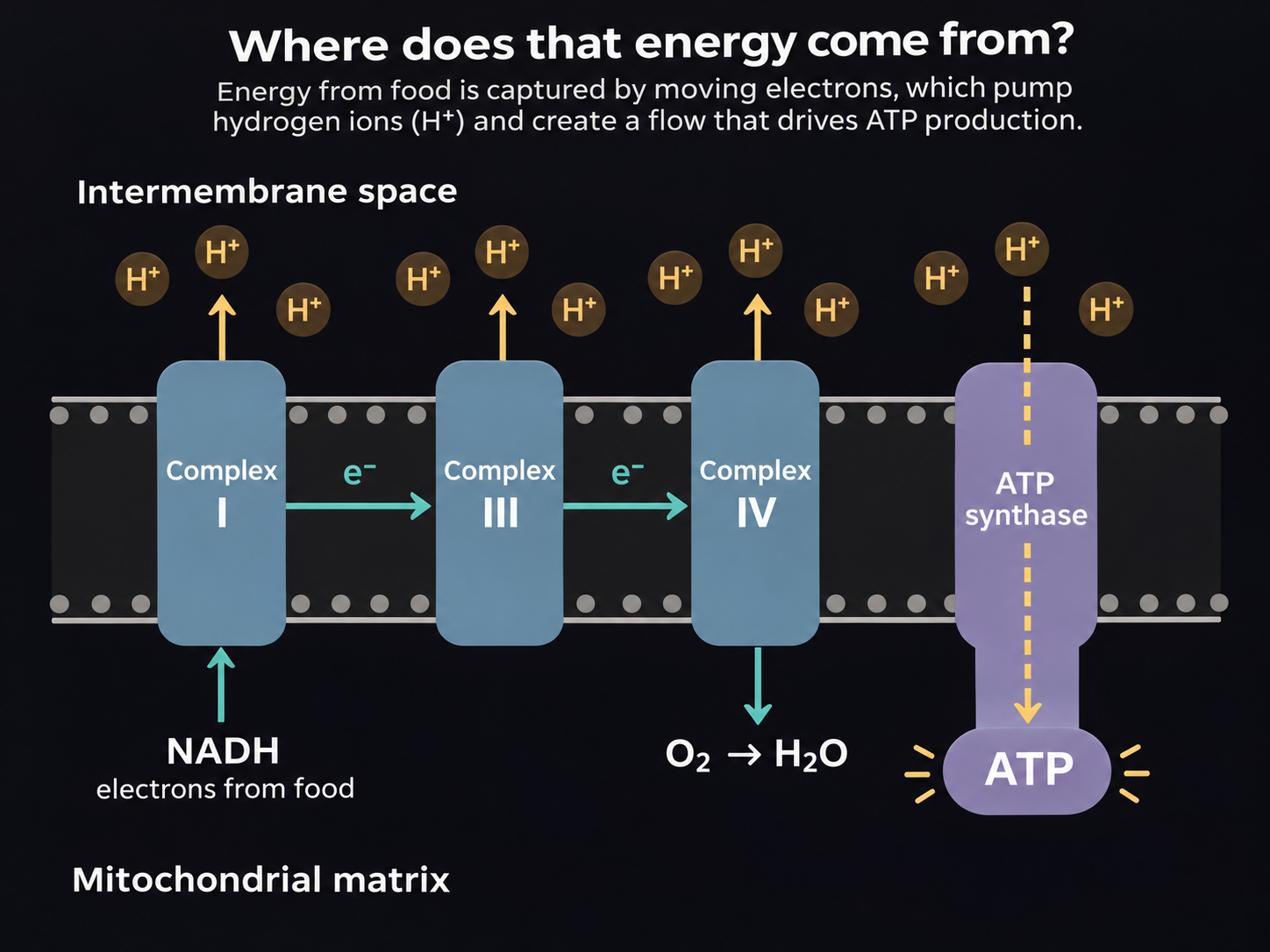
Much of the energy we use to support these processes is made available through small structures within our cells called mitochondria. To appreciate how the environment might influence our ability to produce energy, I think it helps to have some understanding of what's occurring within these structures.
You may be familiar with the Krebs cycle, which is one of the processes through which we derive energy from the food we consume. Although we tend to associate the Krebs cycle with the production of ATP, much of what occurs during this process involves extracting electrons from the products of food metabolism. These electrons are collected by molecules such as NAD+, forming NADH, which then carries them to another part of the mitochondria known as the electron transport chain.
Here, the electrons are passed between a series of molecules, releasing energy as they move through the chain. For this process to continue, there needs to be something at the end of the chain capable of accepting those electrons. This is one of the reasons we need the oxygen we breathe. The energy released during the transfer of these electrons is used to produce adenosine triphosphate (ATP), a molecule through which energy is made available for much of the work occurring within our cells.
There's considerably more to this process than described here, but the interesting part is that our ability to derive usable energy from food depends on how well these physical structures function and how effectively electrons can move between the molecules within them. If something were to interfere with the transfer of electrons or the ability of our mitochondria to utilize the energy released during that process, our capacity to produce ATP could become compromised, even if the amount and quality of the food we consume were to remain the same.
How the environment influences energy production
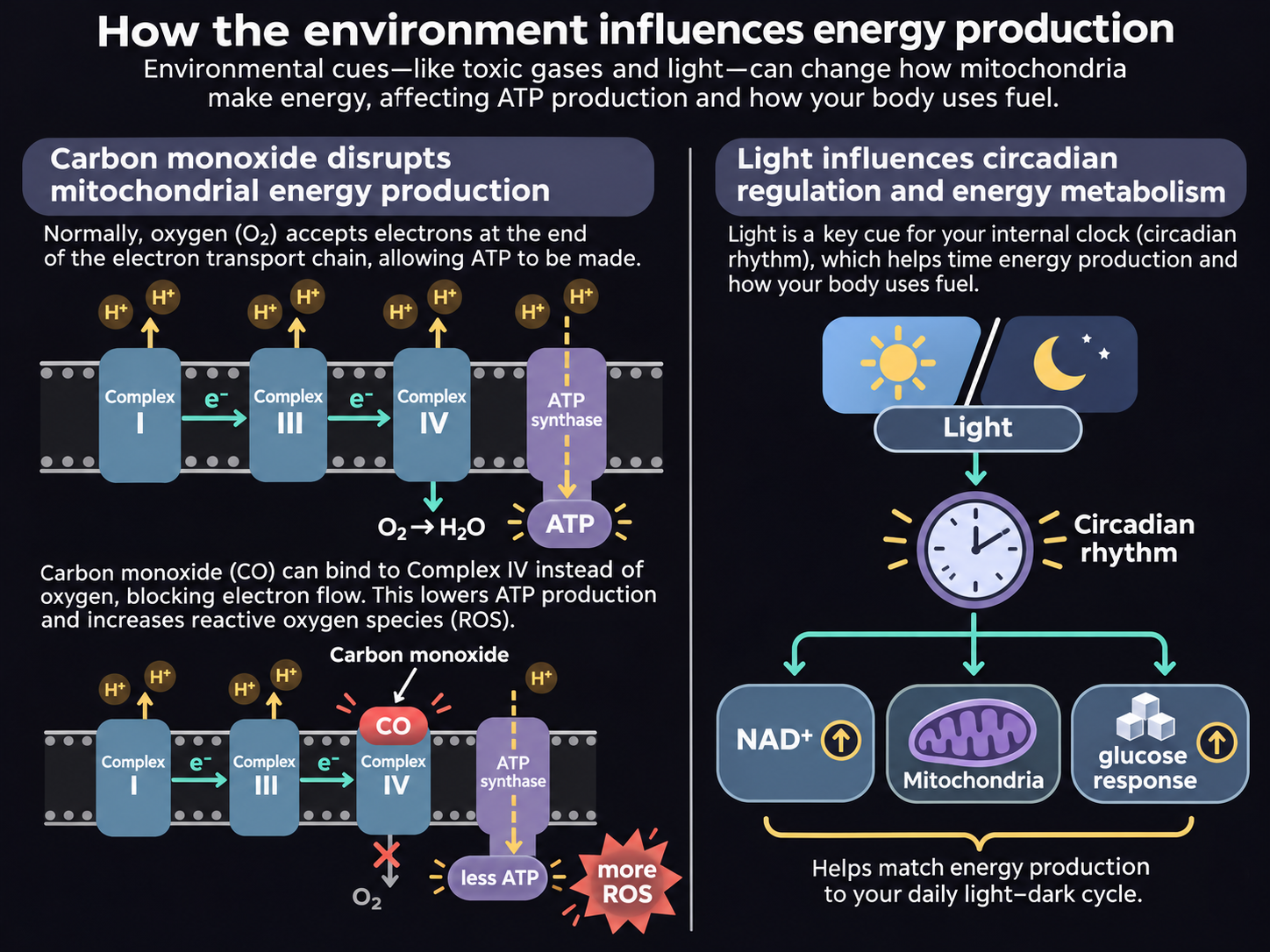
A relatively straightforward, albeit extreme, example of how the environment can interfere with this process is carbon monoxide exposure. We're generally aware of the dangers associated with breathing in carbon monoxide, but understanding some of what occurs within our cells when we're exposed to it might help explain why it's so dangerous. Remember that the movement of electrons through the electron transport chain depends on oxygen being able to accept those electrons at the end of the chain. In addition to reducing the amount of oxygen delivered to our cells, carbon monoxide can attach itself to a protein at the end of the electron transport chain, interfering with the reaction through which oxygen accepts those electrons.
As a result, the movement of electrons through the chain becomes disrupted, reducing the amount of energy available for the production of ATP. Some of the electrons may also react prematurely with oxygen elsewhere along the chain, increasing the production of molecules known as reactive oxygen species. Although some of these molecules serve useful biological functions, excessive amounts can contribute to damage to proteins, DNA, and cellular membranes, including the structures within our mitochondria responsible for producing energy in the first place. [1] In this particular instance, we have an environmental exposure that can simultaneously compromise the body's ability to produce energy and increase the amount of damage it needs to repair.
The environment can also influence energy metabolism through its role in regulating biological processes. Light, for example, helps regulate our circadian rhythms, which coordinate much of our physiology with the recurring changes in our environment throughout the day. These rhythms influence the activity of numerous enzymes involved in energy metabolism and, consequently, how we utilize the nutrients we consume. In a 2013 study, researchers demonstrated that the circadian clock in mice regulates the availability of NAD+, the molecule we discussed earlier in relation to electron transfer. Changes in its availability influenced the activity of mitochondrial enzymes, oxygen consumption, and ATP production. [2]
In another study, published in 2022, researchers found that healthy adults who spent a single night sleeping in a moderately illuminated room exhibited greater insulin resistance the following morning than those who slept in a nearly dark room. [3] By changing the lighting conditions under which participants slept, the researchers were able to alter how their bodies responded to glucose the following morning.
These examples involve different mechanisms, but both help explain how the conditions in which we live can influence our ability to utilize the resources available to us. They also make me curious about the extent to which other physical properties of our environment might influence cellular function through mechanisms that are less well understood.
The energetic cost of adapting to our environment
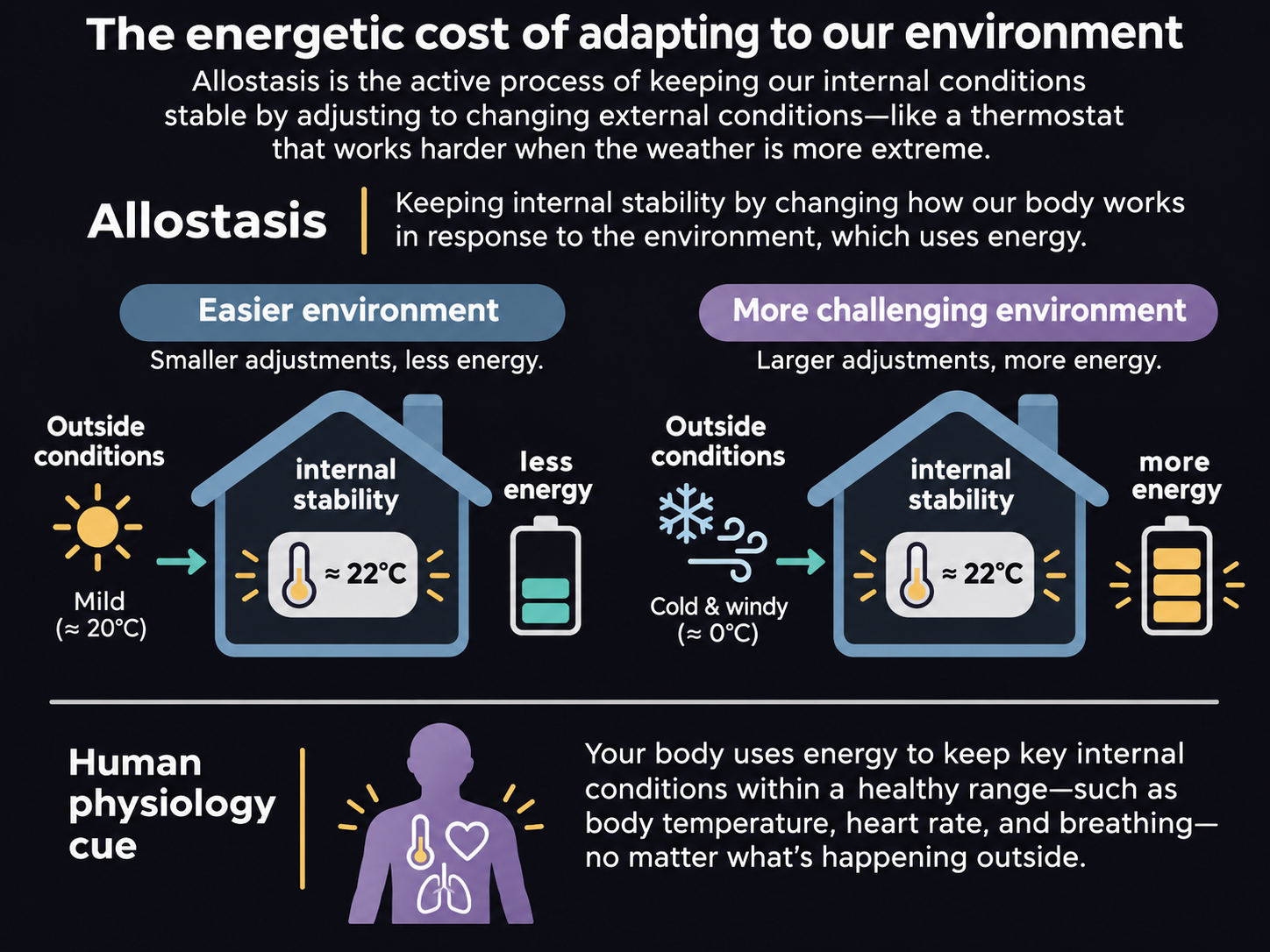
In addition to considering how much energy we're capable of producing, we also need to consider how much energy it costs us to exist within a particular environment.
The body is continually making physiological adjustments in response to what's occurring around us and in anticipation of what might occur. This process is referred to as allostasis — the body's active process of maintaining internal stability by anticipating and adapting to changing demands. One way to think about this is in terms of how a thermostat regulates the conditions within a house. As the conditions outside change, the heating and cooling systems adjust their activity to maintain the conditions inside within a desired range. Depending on the conditions outside, considerably more energy may be required to maintain the same conditions inside.
Our bodies are capable of making similar adjustments, although through considerably more sophisticated mechanisms. Consider what occurs when we perceive a threat. Our heart rate may increase, our nervous system becomes more active, and changes in hormone production make additional energy available to the tissues that might need it. The body is making these adjustments in anticipation of the demands it may need to accommodate, but producing and sustaining these responses also requires energy.
In 2022, researchers Natalia Bobba-Alves, Robert-Paul Juster, and Martin Picard proposed an energetic model of allostatic load. Their model suggests that when the energetic requirements of responding to persistent stress become sufficiently great, they may begin to compete with the energetic requirements of maintaining and repairing the body. [4]
In a subsequent study, published in 2023, researchers exposed human cells to prolonged glucocorticoid signaling, essentially mimicking the effects of sustained exposure to stress hormones at a cellular level. They observed an approximately 60% increase in cellular energy expenditure relative to cell size, accompanied by evidence of mitochondrial DNA instability, changes associated with accelerated cellular aging, and a reduction in the number of times the cells were capable of dividing. [5]
Although these findings were observed in cells outside the body and cannot necessarily be extrapolated to the human organism as a whole, they provide some insight into how the energetic cost of responding to persistent stress might contribute to a deterioration in biological function. If a considerable amount of the energy we produce is continually being utilized to accommodate the demands of our environment, how much capacity remains for the maintenance and repair of our biological structures, let alone our ability to adapt to additional demands?
Understanding health as a capacity
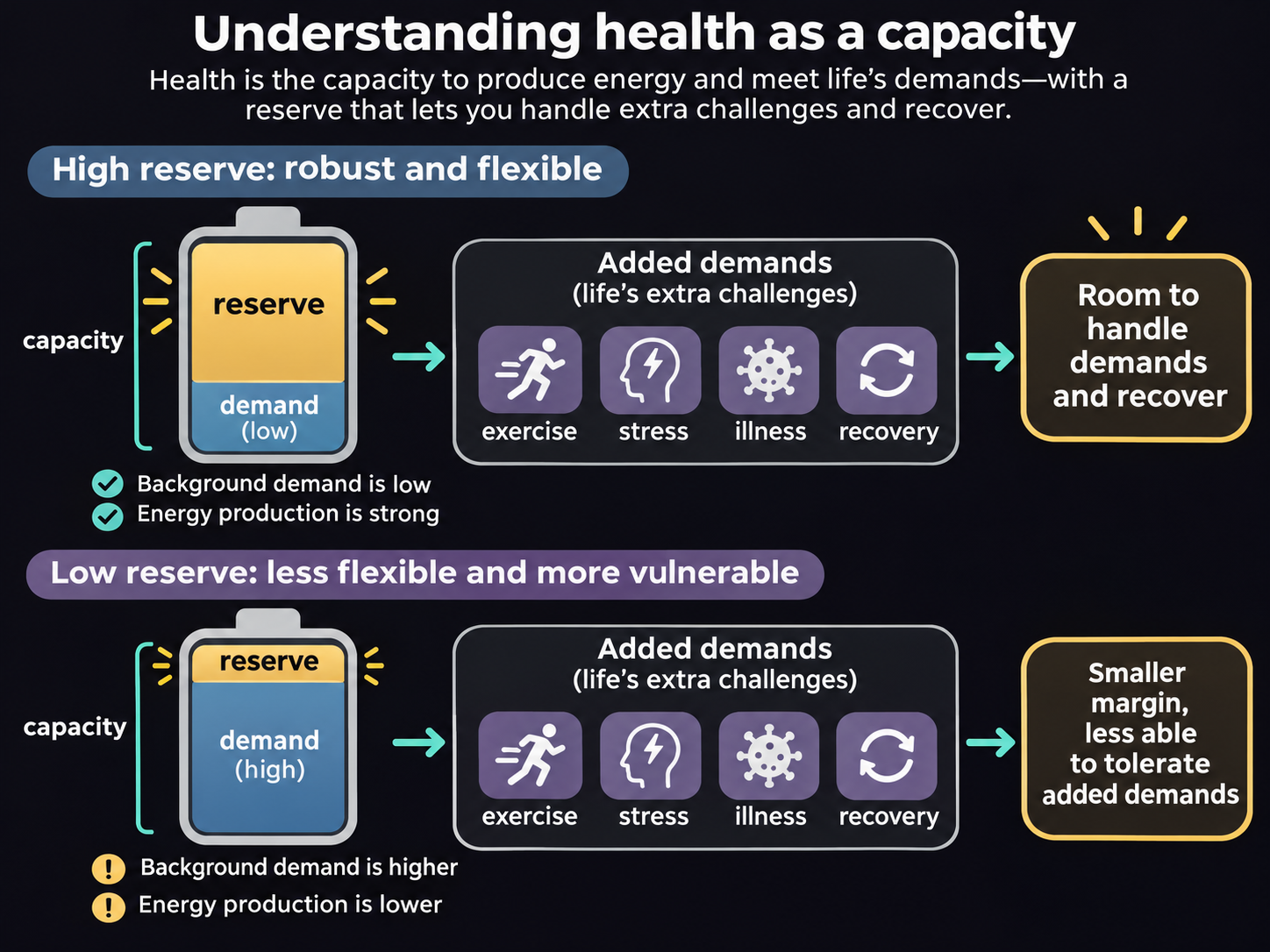
Our mitochondria are capable of increasing their activity when our cells require more energy. Researchers use the term spare respiratory capacity to describe the difference between the level of mitochondrial respiration required under existing conditions and the maximum level that can be achieved. This gives us some indication of a cell's ability to accommodate additional demands for energy. [6]
I think this gives us a useful way to understand at least one aspect of how I've come to define health as "the capacity to live well."
Imagine that someone is living within an environment that is gradually compromising their ability to produce usable energy, increasing the amount of energy required to maintain themselves, or some combination of the two. Initially, they may have sufficient capacity to accommodate these changes without experiencing any particularly noticeable deterioration in how they feel or function. Their body may still be capable of meeting the demands of everyday life, even though its capacity to accommodate additional demands has begun to diminish.
Over time, as the difference between how much energy they're capable of producing and how much they're already required to expend becomes smaller, they may find it increasingly difficult to respond to things they were previously capable of tolerating. Perhaps they find themselves needing longer to recover from exercise, becoming less tolerant of psychological stress, or experiencing greater difficulty recovering from illness or injury.
It's conceivable that a considerable amount of this capacity could be lost before someone develops a recognizable disease. Within my understanding of health, however, that person may already be experiencing a deterioration in health because their capacity to function within and respond to reality has diminished.
Energetic capacity and demand
Adjust both sliders to see how changes in energy-producing capacity and existing demands affect the capacity available to meet additional demands.
Existing demands can be met, with capacity remaining to respond to additional demands.
Conceptual illustration using arbitrary units of energy per unit time. Not a physiological measurement, calorie calculator, or health assessment. Actual energy supply and demand vary across tissues and over time.
The implications for how we approach health
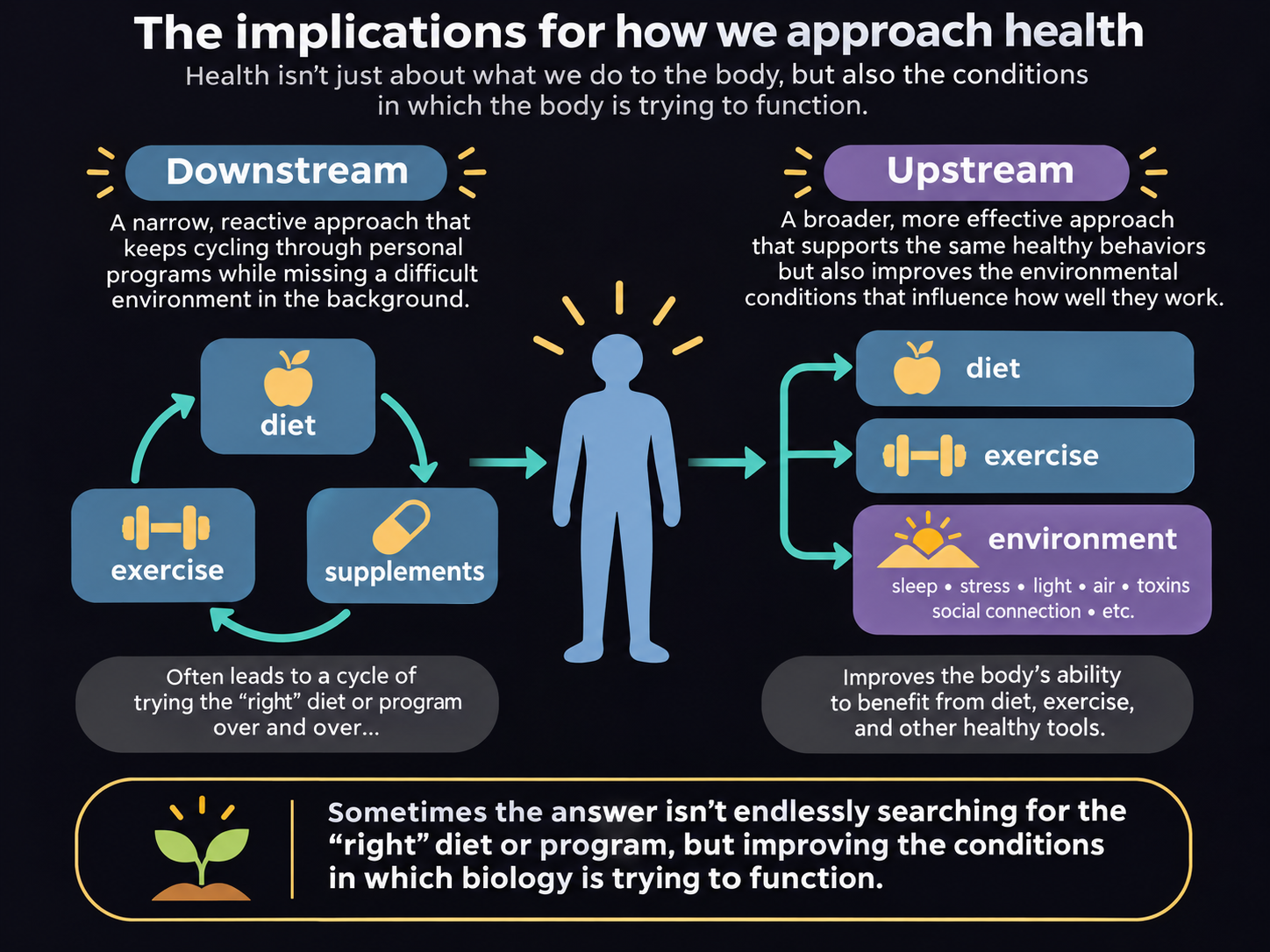
Consider the implications of this for exercise. When we exercise, we deliberately introduce a disturbance that requires the body to respond and, given sufficient resources and the opportunity to recover, adapt. Much of what makes exercise beneficial is dependent upon what the body is capable of doing in response to that disturbance. Nutrition provides many of the materials and metabolic substrates necessary for that process, but the body still needs to be capable of utilizing those resources.
If someone's capacity to produce energy is already compromised, or a considerable amount of the energy they're producing is being expended in response to the conditions in which they live, their capacity to recover from and adapt to exercise may also be compromised. Both nutrition and exercise can improve aspects of mitochondrial function and increase our capacity to accommodate physiological demands. However, their ability to compensate for unfavorable environmental conditions is unlikely to be unlimited.
I wonder how differently someone might respond to the same nutritional and exercise interventions if they were living within an environment that was more conducive to energy production or required less energy to maintain normal physiological function.
Part of what I'm trying to understand is how much of what we currently attempt to address through changes in nutrition, exercise, supplementation, and other interventions may have some of its origins further upstream, in the conditions under which our biology is attempting to function.
When someone struggles to improve their health despite making considerable efforts to do so, there's a tendency to assume that some aspect of their diet or exercise program needs further improvement. They may spend years experimenting with different approaches under the assumption that they simply haven't found the right one for them. But if the effects of their environment are sufficient to offset some of the benefits of those interventions, how much improvement can we reasonably expect from continuing to modify them?
I think developing a better understanding of how our environment influences our capacity for health could substantially change the way we go about addressing these problems. It may allow us to identify aspects of someone's life that warrant intervention and consider solutions that we might otherwise overlook if our attention remains primarily focused on nutrition and exercise.
References
Dent et al. (2024). Carbon Monoxide Poisoning: From Microbes to Therapeutics. Annual Review of Medicine, 75, 337–351.
Peek et al. (2013). Circadian Clock NAD+ Cycle Drives Mitochondrial Oxidative Metabolism in Mice. Science, 342(6158), 1243417.
Mason et al. (2022). Light Exposure During Sleep Impairs Cardiometabolic Function. Proceedings of the National Academy of Sciences, 119(12), e2113290119.
Bobba-Alves, Juster & Picard (2022). The Energetic Cost of Allostasis and Allostatic Load. Psychoneuroendocrinology, 146, 105951.
Bobba-Alves et al. (2023). Cellular Allostatic Load Is Linked to Increased Energy Expenditure and Accelerated Biological Aging. Psychoneuroendocrinology, 155, 106322.
Pfleger, He & Abdellatif (2015). Mitochondrial Complex II Is a Source of the Reserve Respiratory Capacity That Is Regulated by Metabolic Sensors and Promotes Cell Survival. Cell Death & Disease, 6, e1835.